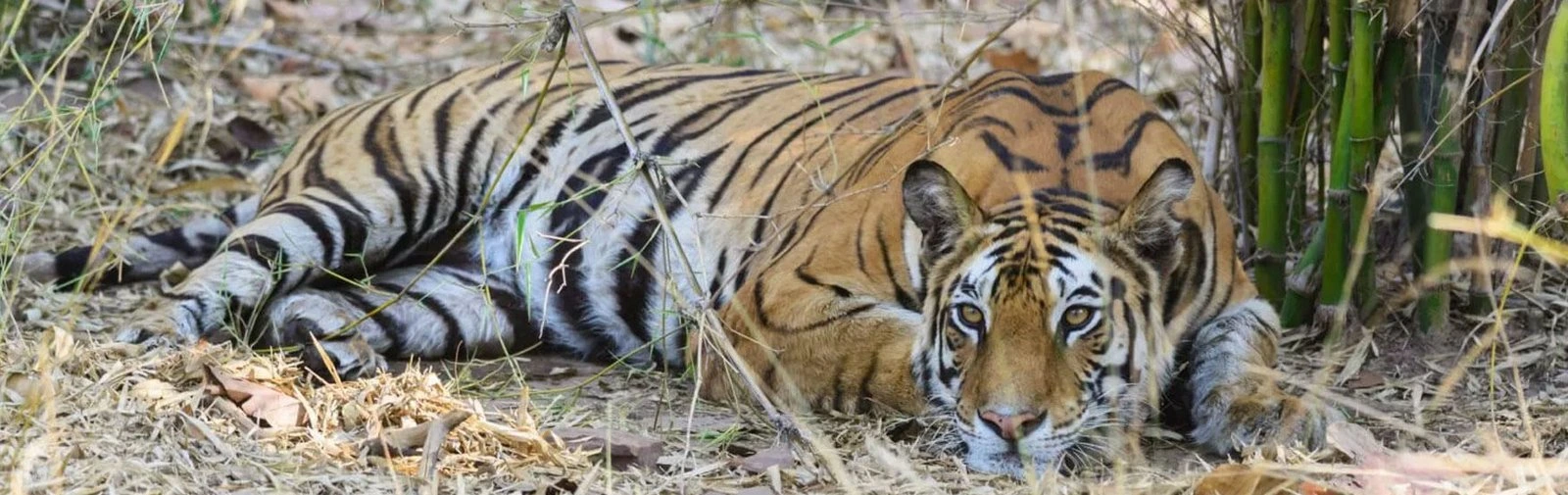
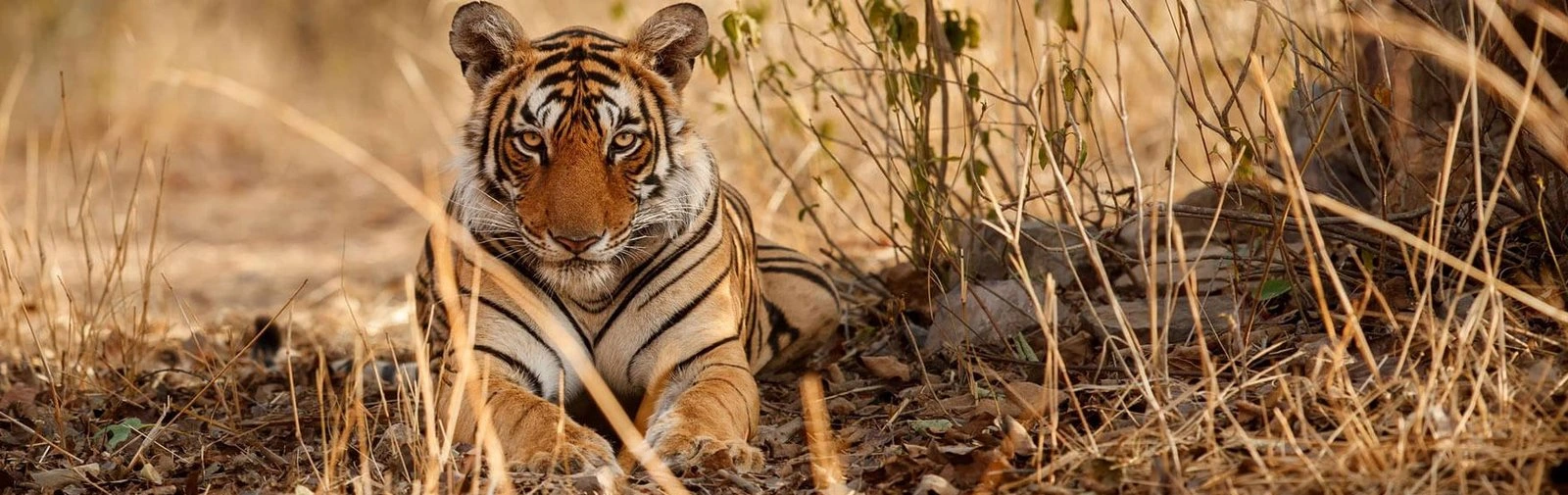
Tiger resting in the dry grass of Panna Tiger Reserve, Madhya Pradesh
Panna Tiger Reserve
Panna, Madhya Pradesh

Overview of Panna Tiger Reserve

Panna Tiger Reserve lies in the Panna and Chhatarpur districts of northern Madhya Pradesh, in the rugged Vindhyan hills not far from the famous temples of Khajuraho. The core area covers about 543 sq km, and together with the surrounding buffer the reserve spreads over roughly 1…

  • LocationPanna, Madhya Pradesh
  • Area543 km²

The landscape is a mix of dry teak and mixed deciduous forest, open grassland, rocky plateaus and deep gorges. The Ken River flows through the heart of the park, creating waterfalls, quiet pools and sandy banks where wildlife gathers, especially in summer. Altitude ranges from about 210 to 540 metres, and temperatures swing from near 5 degrees in winter to 45 degrees in peak summer.

Tigers are the main attraction, but a Panna jungle safari also gives you a chance to see leopards, sloth bears, wolves, chinkara, crocodiles and more than 200 species of birds. For travellers planning a tiger safari in Madhya Pradesh, Panna pairs naturally with Khajuraho, Bandhavgarh and Kanha.

History and Conservation Story of Panna National Park

  • 1981The area was formally protected as a national park and was declared a Tiger Reserve in 1994
  • 2007The park received the Ministry of Tourism award for the best maintained national park in the country
  • 2009Starting, tigers were brought in from other Madhya Pradesh reserves and carefully monitored

01The hunting era

Panna National Park grew out of forests that were once royal hunting grounds. The area was formally protected as a national park in 1981 and was declared a Tiger Reserve in 1994, the twenty-second in India and the fifth in Madhya Pradesh.

02Protection

In 2007 the park received the Ministry of Tourism award for the best maintained national park in the country, and in 2011 it was designated a Biosphere Reserve. The core area includes the Ken Gharial Sanctuary (about 78.5 sq km) and the Gangau Wildlife Sanctuary (about 45 sq km), which is why the park protects both forest wildlife and river life.

03Chapter 3

In the late 2000s poaching and weak monitoring wiped out the tigers of Panna. Starting in 2009, tigers were brought in from other Madhya Pradesh reserves and carefully monitored, many with radio collars.

04The name

With strong protection and the support of local communities the population recovered and the reserve now holds dozens of tigers again. Visiting Panna means seeing one of India’s most important conservation comebacks first hand.

Wildlife and Biodiversity of Panna National Park

Flora of the Vindhyan Forest - Panna Tiger Reserve

Flora of the Vindhyan Forest

The hot, dry climate of Panna supports dry teak and mixed dry deciduous forest broken by patches of grassland. Teak dominates, along with kardhai, tendu, mahua, arjun, jamun and bamboo, while the river valleys hold taller trees and shade. In summer the forest thins out and turns golden, which makes wildlife easier to see near waterholes and along the Ken River.

Fauna and Tiger Sightings - Panna Tiger Reserve

Fauna and Tiger Sightings

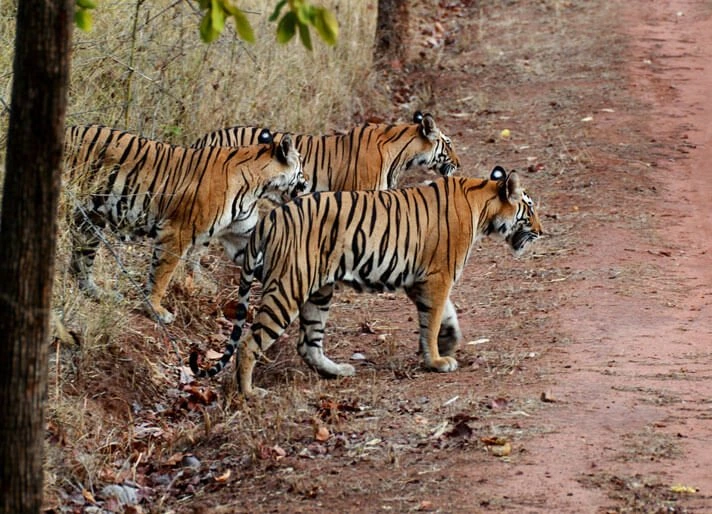
The Bengal tiger is the star of the park, and tiger sightings in Panna are best in the hot months when animals come to water. Sightings always depend on luck, so most visitors book more than one safari. Other animals to look out for include:

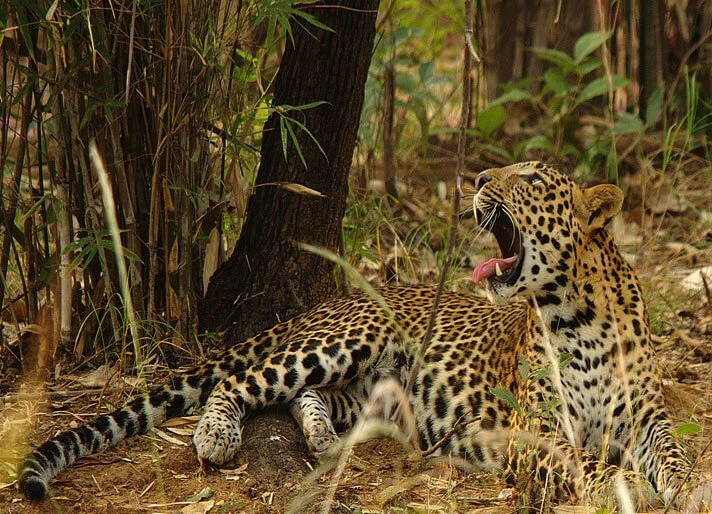
  • Leopard on rocky ridges and gorge edges
  • Sloth bear, often near mahua trees and rocky outcrops
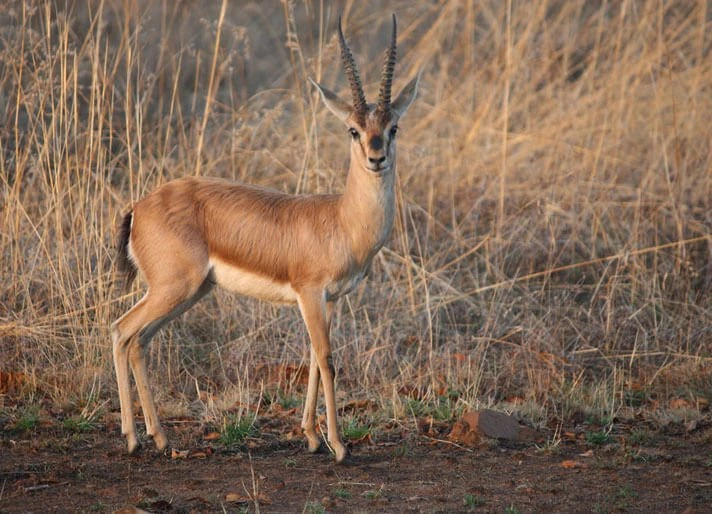
  • Chinkara, chital, sambar and nilgai
  • Wolf, jackal and hyena
  • Marsh crocodile and long-snouted gharial in the Ken River
  • More than 200 bird species, including the king vulture, Indian vulture and, in winter, the bar-headed goose

Winter brings migratory birds, so Panna is a rewarding stop for birdwatchers as well as tiger lovers.

Jungle Safari Experience in Panna Tiger Reserve

A Panna jungle safari is done in an open jeep with a forest department guide and driver, and each vehicle follows a set route through forest, grassland and riverside tracks. There are two entry gates, Madla and Hinauta.

Safari Gates

  • Madla Gate: the most popular entrance, with the best choice of hotels and resorts close by. It is the usual pick for families and first-time visitors.
  • Hinauta Gate: a quieter entrance that suits photographers and solo travellers who do not mind staying a little farther from the main stay options.

Safari Timings

There are two safaris a day. In summer the morning drive runs from around 6:00 AM to 11:00 AM and the afternoon drive from around 3:00 PM to 6:30 PM. In winter the morning drive starts at about 6:30 AM and the afternoon drive runs from around 4:00 PM. Timings change with the season, so we confirm them at the time of booking.

Boat Ride on the Ken River

The park also offers a short motorboat ride on the Ken River, where you can see long-snouted gharials, crocodiles and water birds. Waterfalls such as Raneh Falls and Pandav Falls, and the temples of Khajuraho, are easy additions to a Panna trip.

Permits are limited and fill up quickly in peak months, so book your Panna safari and stay early. Many of our guests choose Eriline Resorts near Madla Gate for an easy start to the morning drive.

How to Reach Panna Tiger Reserve

Three easy ways to reach Panna. Our team can arrange your pickup and transfer.

By air

The nearest domestic airport is Khajuraho, and most flights to it connect through Varanasi and other hubs. The nearest large international airport is Bhopal (Raja Bhoj Airport).

By rail

Satna Junction is the major railway station with good connections to Delhi, Mumbai, Kolkata, Chennai and Bangalore. Khajuraho also has a railway station.

By road

Madhya Pradesh has good state and national highways, and Panna is connected to Khajuraho, Satna, Jhansi, Chhatarpur and Gwalior. Buses reach Panna town from Khajuraho and other nearby cities, and taxis are the easiest way to reach the gates.

Arrange my transfer

Best Time to Visit Panna Tiger Reserve for Tiger Sightings

Best time to visitNovember – April

Best months for sightings

Winter (October to February): The most comfortable season. Mornings are cool and pleasant, temperatures stay between about 5 and 28 degrees, and migratory birds arrive in large numbers, which makes winter ideal for families and birdwatchers.

Carry warm clothes for early drives.

Summer (March to June): Days get very hot, with temperatures climbing past 40 degrees, but this is also when animals come to the Ken River and waterholes, so many wildlife photographers prefer the early morning and late afternoon drives. Carry water, sunscreen and a hat.

Monsoon (July to September): Heavy rain brings the breeding season of many animals, and the park is closed to tourists for these months. The surrounding waterfalls and hills are beautiful, but plan your safari for another season.

For the best mix of comfort and sightings, many visitors plan between November and April and book two or three safaris to improve their chances of seeing a tiger.
Panna Tiger Reserve
November – April
01Where is Panna Tiger Reserve located?

Panna Tiger Reserve is in the Panna and Chhatarpur districts of Madhya Pradesh, in the Vindhya hills. The famous temple town of Khajuraho is the nearest airport and a popular base for visitors.

02How big is Panna National Park?

The core area is about 543 sq km, and with the buffer the reserve covers roughly 1,645 sq km. The core includes the Ken Gharial Sanctuary and the Gangau Wildlife Sanctuary.

03What is the best time to visit Panna National Park?

October to February is the most comfortable season for safaris and birdwatching. March to June is hot but good for seeing animals near water. The park is closed to tourists during the monsoon, from July to September.

04What are the safari timings in Panna?

Two safaris run every day. In summer the morning drive is around 6:00 AM to 11:00 AM and the afternoon drive is around 3:00 PM to 6:30 PM. In winter the morning drive starts around 6:30 AM and the afternoon drive starts around 4:00 PM. We confirm timings at booking.

05Which is the best gate for a Panna safari, Madla or Hinauta?

Madla is the most popular gate and has the best choice of stays nearby, so it suits most families. Hinauta is quieter and works for photographers and solo travellers. Tiger sightings can happen at either gate.

06Are there tigers in Panna?

Yes. Panna lost its tigers in the late 2000s, but a reintroduction programme from 2009 helped the population recover, and the reserve now has dozens of tigers. Sightings are never guaranteed, so book more than one safari.

07What else can I do near Panna National Park?

You can take a boat ride on the Ken River, visit Raneh Falls and Pandav Falls, see the Ken Gharial Sanctuary, and combine your trip with the Khajuraho temples.

08How do I reach Panna National Park?

Fly to Khajuraho (domestic) or Bhopal (international), or take a train to Satna Junction. From there, taxis and buses reach Panna town and the gates. Our team can help with transfers.

09Can I combine Panna with other tiger reserves?

Yes. Panna combines well with Bandhavgarh, Kanha, Pench and Satpura in Madhya Pradesh, and with Khajuraho for culture. We can plan a multi-park trip with safaris and stays.

Cookie preferences

Optional tracking stays off until you allow it. Change your choice anytime.

Read Cookie Policy · Privacy Policy